DVM Student Scholarship Program
Each year, the scholarship committee runs two application cycles for college-specific awards for DVM students: one in November for current students, and one in June for incoming students. Awards are typically announced in April and July, respectively. Students in any year of the program, and at any regional campus, are encouraged to apply each year. While graduating students will see their funds applied immediately, all other students will have funds credited to their student accounts in the following academic year.

Over 350 awards are distributed annually, in amounts up to $51,000.

Over $1.4 million awarded
to DVM students each year.

One application is all it takes to be considered for all CVM awards.
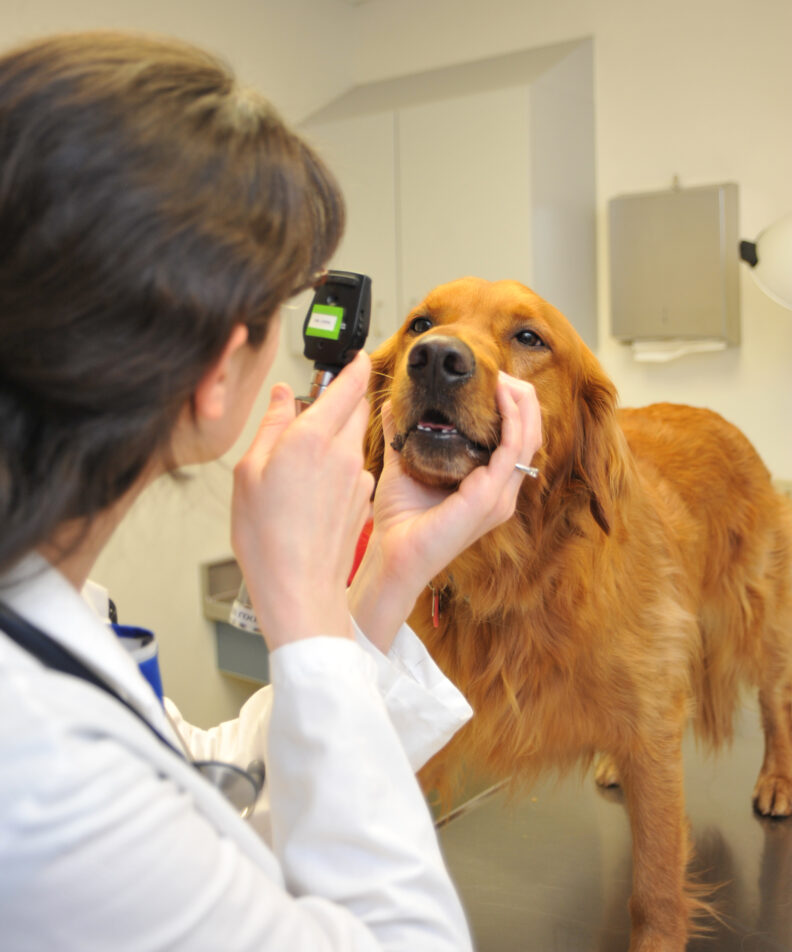
I feel so fortunate to be a part of a community that is dedicated to helping students succeed. Being a scholarship recipient makes me proud of all that I have accomplished in my vet school journey and the resiliency I have developed along the way. Having such generous donors is truly life changing for me and my classmates undertaking such a stressful financial burden, and it allows me to keep my focus on my studies and love for the field of veterinary medicine.
-Elise Osmek (2024 DVM)
Scholarship Spotlights
The Dan and Linda Haskins Veterinary Scholarship
Dan Haskins is a member of the WSU College of Veterinary Medicine class of 1978. While in Pullman, Linda worked as a cook’s assistant in the WSU Food Service program providing family income.
After graduation, Dan accepted a position with Northwest Veterinary Clinic, a rural mixed animal practice in Stanwood, WA where he spent his entire career. Initially assigned to serve on the small animal side, Dan was later able to pursue his life-long dream of being a large animal veterinarian. Dan and Linda grew up in small rural towns in western WA and were married in 1973.
Volunteer service is very important to them. Dan volunteered through the Christian Veterinary Mission on trips to Kenya, Haiti and Brazil. He also participated in USAID’s Farmer-to-Farmer programs in Belarus and Ukraine. He served on the WA State Veterinary Board of Governors and is an active participant of the Stanwood-Camano Community Pet Outreach program.
Dan and Linda value education and wanted to provide support for veterinary students. Their scholarship is for a DVM student who comes from a rural background and interested in large animal medicine (farm animal or equine). They specifically appreciate students who have shown a commitment to volunteer service, like mission or outreach activities.
Salsbury Foundation Presidential Scholarships
Joseph Edward Salsbury was born in England in 1887. He immigrated to America at the age of 21 and enrolled in the Kansas City Veterinary College. Not long after receiving his degree, the young veterinarian devoted himself to identification and low-cost treatment of poultry diseases. This led to his founding, in 1920, of the Salsbury Laboratories in Charles City, Iowa.
The discoveries he and his team of scientists made over the next five decades revolutionized the poultry industry. Their investigations led not only to successful treatment products but also to veterinary education and flock management programs, as well as to the development of swine, canine, and feline vaccines. At the time of his death in 1967, Salsbury Laboratories had become one of the largest animal health products marketers in the world.
In 1985 the Salsbury Foundation established four endowed scholarships in veterinary medicine at WSU in the hope that Salsbury’s legacy will be carried on.
“The endowment established by Mr. Salsbury is one of the largest corporate gifts ever given to address veterinary students’ needs in the U.S. Mr. Salsbury has established 27 scholarships in veterinary colleges nationwide, and the reverberations of those gifts are far reaching. The country’s brightest and most capable students will benefit from these scholarships, and in turn, they will benefit the nation as outstanding veterinary professionals.” – Borje Gustafsson, Emeritus Dean of the College of Veterinary Medicine, Washington State University